Sector 150 Noida vs Reality: Does Green Living Match Buyer Expectations?
Sector 150, Noida, on the Noida–Greater Noida Expressway has been widely marketed as one of the most “green” and low-density residential zones in NCR. With its sports-centric planning, open layouts, and premium projects, it attracts both end-users and investors. But the real question is, does the on-ground reality truly match the expectations of green living?
Is Sector 150, Noida, Really a Green Living Destination or Just a Planned Concept?
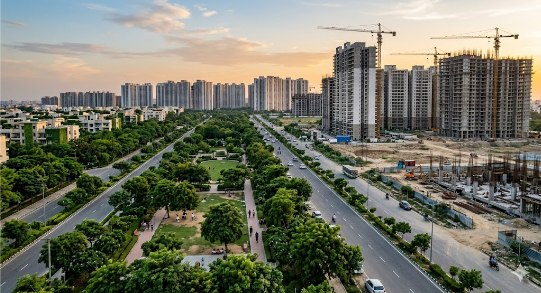
Buyer expectations around Sector 150, Noida, are largely shaped by its branding as a “green sector". Wide internal roads, planned parks, and low-density layouts create an image of peaceful living. However, in reality, the definition of green living here is evolving.
While the sector still offers significantly more open space compared to many NCR regions, increasing residential demand and ongoing development have gradually changed the original low-density feel. The experience today is a mix of planned greenery and expanding urbanisation.
Why is Sector 150, Noida, Considered One of the Greenest Sectors on the Expressway?
Sector 150, Noida, was initially conceptualized as a sports-oriented and environmentally balanced residential zone. Unlike traditional high-density clusters, the planning emphasized:
- Larger green pockets and open landscapes
- Sports-centric infrastructure planning
- Lower FAR (Floor Area Ratio) compared to other sectors
- Strategic positioning along the Noida–Greater Noida Expressway
This planning created strong early expectations of a calm and nature-rich lifestyle. However, as demand increased, residential development intensified, gradually reshaping its original character.
What is the Gap Between Expectation and Reality in Sector 150, Noida?
Is Sector 150 Still Low-Density in Reality?
One of the biggest expectations is low-density living. While Sector 150 still performs better than many nearby zones, vertical expansion has increased population density. The result is a partial shift from “open living” to “structured urban community living".
Do Residents Actually Experience Uninterrupted Green Views?
In many pockets, green views exist but are not uniform. Construction activity, evolving skyline, and ongoing project development sometimes limit uninterrupted greenery. The “garden-like” experience depends heavily on the micro-location within the sector.
Is Lifestyle as Peaceful as Expected?
While Sector 150 offers better liveability than congested urban clusters, peak-hour movement, maintenance variations, and rising population density create a gap between brochure expectations and daily experience.
How Does the Noida-Greater Noida Expressway Influence Liveability?
The Noida–Greater Noida Expressway is both a strength and a challenge for Sector 150.On the positive side:
- Excellent connectivity to Noida, Greater Noida, and Delhi
- Smooth access to corporate hubs
- Strong long-term infrastructure growth potential
On the practical side:
- Peak-hour congestion impacts commute experience
- Dependence on the expressway for almost all major connectivity routes
- Increased development pressure along the corridor
This dual nature significantly shapes the “reality check” of living in Sector 150.
How Do Nearby Sectors Like Sector 152 and Sector 153 Influence Expectations?
The surrounding sectors play a major role in redefining lifestyle standards along the expressway. Sectors 152 and 153 are rapidly emerging as premium residential clusters, adding competition and raising buyer expectations.
ACE Parkway in Sector 150, Noida
A key residential development that reinforces the idea of planned green living, ACE Parkway focuses on landscaped surroundings and thoughtful community design, aligning closely with the sector’s original vision.
ACE PARKWAY – RERA REG NO. UPRERAPRJ4514 | www.up-rera.in/projects
ACE 153 in Sector 153, Noida
While Sector 150 is known for residential green living, ACE 153 is a commercial project in Sector 153, Noida, that contributes to the broader growth of the Noida Expressway corridor. Designed as a business destination, the project supports the increasing demand for premium office and commercial spaces, helping create a live-work ecosystem for the region. Its strategic location along the expressway enhances accessibility for businesses and professionals while adding to the area's long-term economic potential.
ACE 153 - RERA REG NO. UPRERAPRJ423807 | www.up-rera.in/projects
ACE Starlit in Sector 152, Noida
Located in Sector 152, ACE Starlit adds to the residential appeal of the expressway belt by offering a modern lifestyle-focused living environment. Its location benefits from excellent connectivity and the evolving social infrastructure of the corridor.
ACE STARLIT – RERA REG NO. UPRERAPRJ677294 | www.up-rera.in/projects
Is Sector 150, Noida, Still a Good Investment Despite Expectation Gaps?
Despite the difference between perception and reality, Sector 150 remains a strong investment destination. The reasons include:
- Long-term infrastructure growth along the expressway
- Continuous demand from end-users seeking balanced living
- Proximity to IT hubs and commercial zones
- Rising premium housing demand in NCR
The key shift is from “ideal green living” to “structured urban green ecosystem".
Who Should Consider Buying in Sector 150, Noida?
Sector 150, Noida, is best suited for:
- End-users who value planned communities over absolute isolation
- Professionals working in Noida and nearby corporate hubs
- Investors focusing on long-term capital appreciation
- Buyers are comfortable with evolving urban landscapes
It may not fully satisfy those expecting completely serene, village-like green surroundings.

Conclusion
Sector 150, Noida, successfully delivers a better balance of greenery and urban infrastructure compared to most NCR sectors. However, the reality is more nuanced than the marketing narrative. It is not an untouched green zone, but rather an evolving urban ecosystem shaped by demand, infrastructure growth, and expressway connectivity.
The expectation of pure green living has transitioned into a more practical reality, where planned greenery exists, but within a rapidly developing residential hub. The surrounding sectors like 152 and 153, along with projects such as ACE Parkway, ACE 153, and ACE Starlit, further reinforce this transformation.
FAQs
Is Sector 150, Noida, still considered low-density?
It is relatively low-density compared to many NCR areas, but increasing development has reduced the original open-space advantage.
How is connectivity from Sector 150, Noida?
Connectivity via the Noida, Greater Noida Expressway is excellent, offering direct access to major business hubs, though peak-hour traffic can be challenging.
Is Sector 150 better than Sectors 153 and 152?
Each sector has a different advantage. Sector 150 focuses on green planning, while 152 and 153 offer more modern lifestyle-oriented developments.
Are ACE projects good for investment in this region?
Yes, projects like ACE Parkway, ACE 153, and ACE Starlit contribute strongly to the premium residential ecosystem of the expressway belt.
Is Sector 150, Noida, suitable for end-use living?
Yes, especially for buyers seeking a balance between connectivity, greenery, and modern infrastructure.